

Best Lab-Grown Diamond Rings Under $2,000: 2026 Buying Guide
Best Lab-Grown Diamond Rings Under $2,000: 2026 Buying Guide
A practical US buying guide to lab-grown diamond rings priced below $2,000 in the audited STAR JEWELLERY catalog — compare real designs, diamond shapes, carat weights, gold options, certification details and current listed prices before you choose.
What can you get for $2,000? The audited STAR JEWELLERY catalog includes multiple lab-grown diamond rings listed from about $999 to $1,775, including round, oval, radiant, pear, marquise, cushion, princess and multi-stone designs. Several listings show IGI certification and 10K–14K gold options. Some audited product pages may be sold out at a given moment, so always confirm the current product-page status, selected variant and price before ordering.
Best Lab-Grown Diamond Rings Under $2,000
Searching for the best lab-grown diamond rings under $2,000 is really a comparison problem. At this budget, shoppers can weigh a larger center stone against a more elaborate setting, or choose a distinctive shape such as oval, radiant, pear, or marquise. The most useful comparison is not a single ranking; it is understanding what each design emphasizes.
STAR JEWELLERY's audited catalog shows that a $2,000 budget can reach well beyond basic solitaire configurations. For example, the current listings include a 1.25 ct oval title at $1,355, a 2.0 ct round main-stone ring at $1,340, a 1.50 ct radiant-cut title at $1,380, and a 2.00 ct halo title at $1,699.99.
To broaden the funnel around this commercial search, shoppers can also browse lab-grown diamond rings and lab-grown diamond engagement rings before narrowing to a specific product.
What Can You Really Get for $2,000?
A $2,000 ceiling does not translate into one fixed carat size. Shape, setting, number of accent stones, metal, certification, and the exact diamond specification all affect the final price. In STAR JEWELLERY's current audited listings, the budget can cover both simpler center-stone designs and more detailed multi-stone settings.
| Budget area | Live catalog examples | What to compare |
|---|---|---|
| Under $1,000 | 1.00 ct halo listing at $999 | Availability, exact variant, center/total carat breakdown |
| $1,000–$1,500 | 1.00 ct white-gold listing at $1,245; 1.25 ct oval at $1,355; 2.0 ct round listing at $1,340; 1.50 ct radiant at $1,380; 1.00 ct round at $1,499 | Shape, setting complexity, total diamond weight, metal choice |
| $1,500–$2,000 | Art Deco at $1,475; 2.00 ct halo at $1,699.99; three-stone at $1,775; 1.00 ct colorless round three-stone halo at $1,525 | How much of the budget goes toward the center stone vs. accents and setting |
Prices shown are catalog starting prices captured during the audit and are not guaranteed future prices. At least some individual product pages showed sold-out status at the time of the live check, so the product page—not the article—is the final source for current availability.
Featured STAR JEWELLERY Rings Under $2,000
The 14 products below are selected for design and specification diversity rather than ranked as winners. Each product appears once as a primary card. Prices are catalog starting prices captured in the audit; current stock can change, so use the product page for the final purchase status.

IGI Certified 1.00 ct Lab Grown Solitaire Diamond Halo Engagement Ring
Listed price: $999
Notable for its $999 listed price and IGI-certified 1.00 ct center stone in a halo design. It gives shoppers a lower-price starting point while still offering multiple gold-color choices to compare on the live product page.
VIEW PRODUCT
Two Stone Open CVD Diamond Toi et Moi Ring
Listed price: $1,135
Notable for its open two-stone silhouette, pairing an 8×6 mm pear with an 8×4 mm marquise. The $1,135 listing is a useful reference for shoppers who want contrasting shapes instead of a traditional single-center design.
VIEW PRODUCT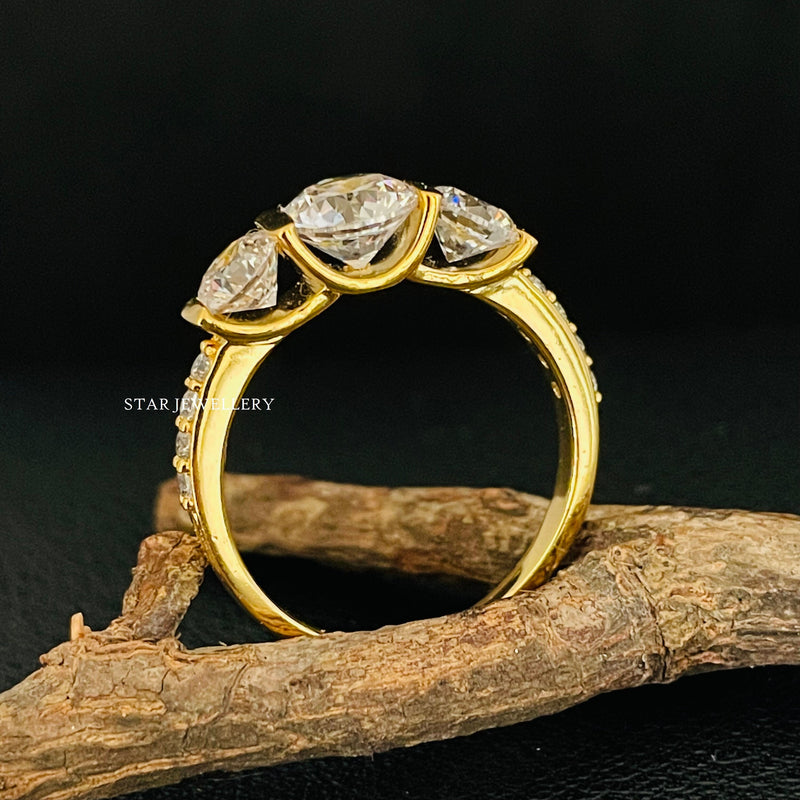
Three Stone Bar Set Lab Grown Diamond Engagement Ring
Listed price: $1,135
Notable for its $1,135 starting price and three-stone layout. The live page lists 2.10 ct total across 11 round-cut lab-grown diamonds, making it a useful comparison for shoppers who want a multi-stone look without using the full budget.
VIEW PRODUCT
1.00 Ct IGI Certified Oval Cut White Gold Lab Grown Diamond Engagement Ring
Listed price: $1,245
Notable for combining an oval-led design with round accent stones at a $1,245 listed price. The product title specifies white gold, while the page also shows yellow, white and rose gold options, so confirm the exact configuration before ordering.
VIEW PRODUCT
2.0 Ct IGI Certified Lab Grown Diamond Engagement Ring
Listed price: $1,340
Notable for its 2.00 ct main stone and 2.10 ct total diamond weight at a $1,340 listed price. It offers a straightforward benchmark for shoppers comparing a larger center stone against more elaborate multi-stone settings.
VIEW PRODUCT
1.25 Ct Oval Cut IGI Certified Lab Grown Diamond Engagement Ring
Listed price: $1,355
Notable for its elongated 1.25 ct oval title at $1,355. The live page also lists 1.75 ct total diamond weight, so shoppers should use the product page to confirm the exact stone breakdown and variant before checkout.
VIEW PRODUCT
1.50 Ct Radiant Cut IGI Certified Lab Grown Diamond Ring
Listed price: $1,380
Notable for its 1.50 ct radiant-cut title and 1.90 ct total diamond weight at $1,380. The page also displays 18K customization, giving shoppers a useful option to compare gold purity alongside the rectangular clipped-corner shape.
VIEW PRODUCT
Art Deco Brilliant Round Cut Lab Grown Diamond Miligrain Engagement Ring
Listed price: $1,475
Notable for its vintage-inspired miligrain detailing, 2.00 ct center and marquise side stones at a $1,475 listed price. It suits shoppers comparing decorative, heritage-inspired styling with a more traditional contemporary solitaire.
VIEW PRODUCT
1.00 Ct IGI Certified Lab Grown Diamond Engagement Ring
Listed price: $1,499
Notable for its straightforward round-diamond profile and $1,499 listed price. The page lists 1.17 ct total diamond weight across 11 pieces, giving shoppers a simple baseline for comparing carat, stone count and gold options.
VIEW PRODUCT
1.00 Ct Colorless Round Cut Three Stone Halo Lab Grown Diamond Ring
Listed price: $1,525
Notable for its round-and-pear three-stone halo layout at a $1,525 listed price. The live page lists 1.90 ct total diamond weight across 44 pieces, making it a detailed option for shoppers using more of the $2,000 budget.
VIEW PRODUCT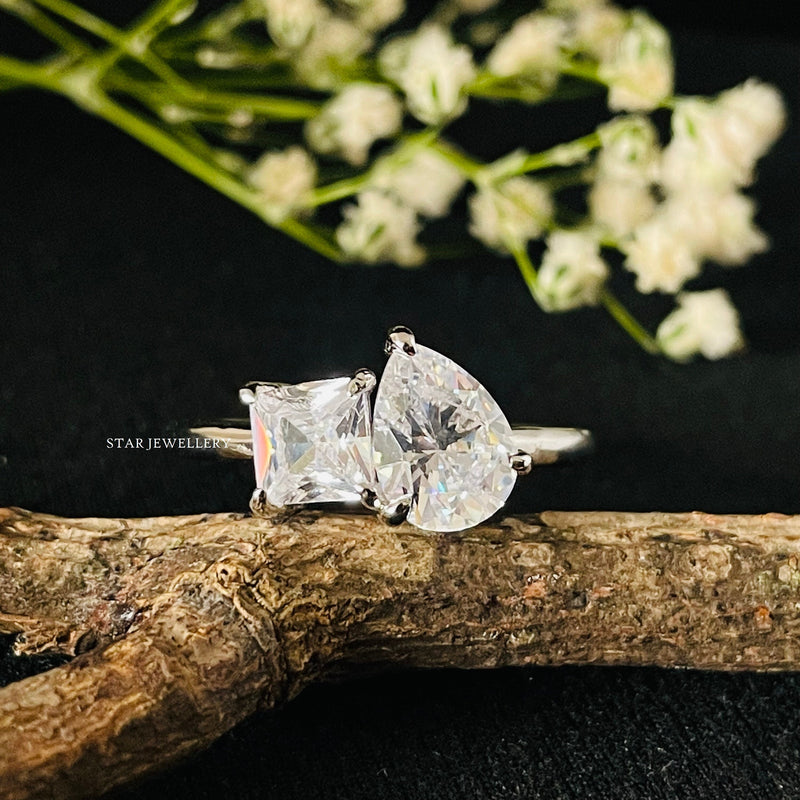
Solid Gold Toi Et Moi Princess Cut & Pear Cut Lab Grown Diamond Ring
Listed price: $1,645
Notable for pairing a 5×5 mm princess cut with an 8×6 mm pear in a 2.00 ct two-stone design. Its contrasting shapes give the ring a distinctly modern look while staying below the $2,000 catalog ceiling.
VIEW PRODUCT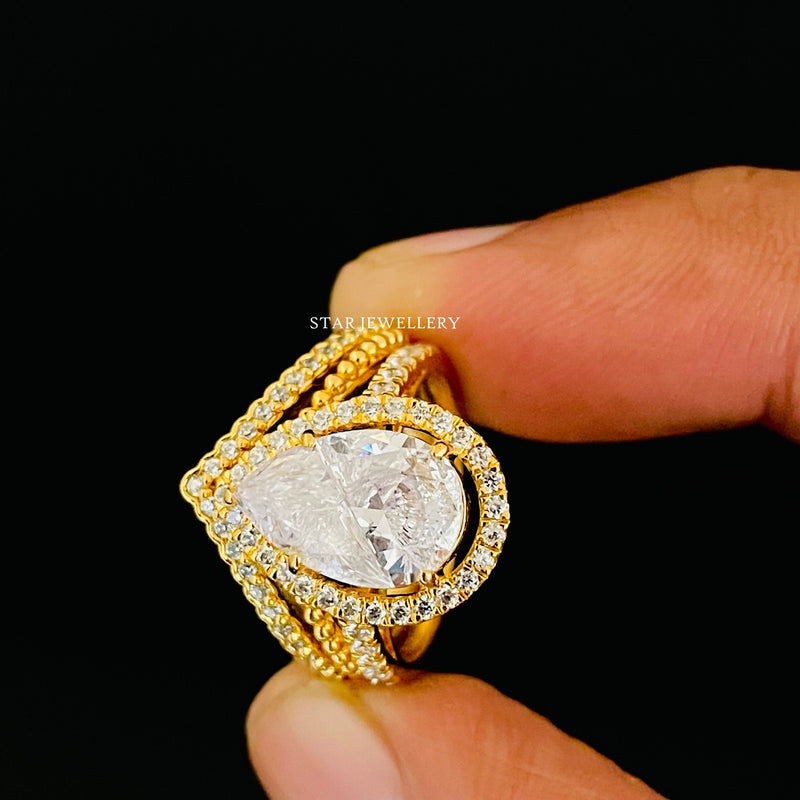
2.00 CT IGI Certified Pear Cut Lab Grown Diamond Ring
Listed price: $1,695
Notable for its 2.00 ct pear-shaped title and 2.60 ct total diamond weight at $1,695. The live page also lists supporting round stones, creating a fuller silhouette than a single-stone pear solitaire.
VIEW PRODUCT
2.00 Ct IGI Certified Lab Grown Diamond Halo Engagement Ring
Listed price: $1,699.99
Notable for its 2.00 ct center-stone title and 2.82 ct total diamond weight at $1,699.99. The round-and-pear halo combination gives shoppers a more detailed setting to compare with simpler two-carat designs.
VIEW PRODUCT
Cushion Cut Three Stone Lab Grown Diamond Ring
Listed price: $1,775
Notable for its $1,775 listed price and 3.25 ct total diamond weight across three stones. The product title says cushion cut, while the detailed page lists round cut, so confirm the exact shape specification before purchase.
VIEW PRODUCTPrice Comparison Table
| Product | Shape / style | Carat / weight | Metal | Certification | Listed price |
|---|---|---|---|---|---|
| IGI Certified 1.00 ct Lab Grown Solitaire Diamond Halo Engagement Ring | Round | 1.00 ct center; 1.47 ct total | 10K–14K yellow, white or rose gold listed | IGI; D color; VS1; CVD-HPHT | $999 |
| Art Deco Brilliant Round Cut Lab Grown Diamond Miligrain Engagement Ring | Round & marquise | 2.00 ct center; 0.81 ct side stones; 2.81 ct combined listed | 10K–14K yellow, white or rose gold | IGI center; VVS–VS; F–G; CVD-HPHT | $1,475 |
| 1.25 Ct Oval Cut IGI Certified Lab Grown Diamond Engagement Ring | Oval | 1.75 ct total diamond weight listed | 10K–14K yellow, white or rose gold | IGI; VVS–VS; F–G; CVD-HPHT | $1,355 |
| 2.00 Ct IGI Certified Lab Grown Diamond Halo Engagement Ring | Round & pear | 2.82 ct total diamond weight; 17 pcs | 10K–14K yellow, white or rose gold | IGI; VVS–VS; F–G; CVD-HPHT | $1,699.99 |
| 1.00 Ct IGI Certified Oval Cut White Gold Lab Grown Diamond Engagement Ring | Oval & round | 1.75 ct total diamond weight; 48 pcs | White-gold listing; page also shows 10K–14K yellow, white and rose selections | IGI; VVS–VS; F–G; CVD-HPHT | $1,245 |
| Two Stone Open CVD Diamond Toi et Moi Ring | Pear & marquise | 1.75 ct total; pear 8×6 mm; marquise 8×4 mm | 10K–14K yellow, white or rose gold | VVS; CVD-HPHT; prong setting | $1,135 |
| Cushion Cut Three Stone Lab Grown Diamond Ring | Cushion in product title; detail lists round cut | 3.25 ct total listed on detail page; 3 pcs | 10K–14K yellow, white or rose gold | IGI; VVS–VS; F–G | $1,775 |
| 2.0 Ct IGI Certified Lab Grown Diamond Engagement Ring | Round | 2.00 ct main stone; 2.10 ct total; 13 pcs | 10K–14K yellow, white or rose gold | IGI; VVS–VS; F–G; CVD-HPHT | $1,340 |
| 1.00 Ct IGI Certified Lab Grown Diamond Engagement Ring | Round | 1.17 ct diamond weight; 11 pcs | 10K–14K yellow, white or rose gold | IGI; VVS–VS; F–G; CVD-HPHT | $1,499 |
| 1.50 Ct Radiant Cut IGI Certified Lab Grown Diamond Ring | Radiant & round | 1.90 ct total; 35 pcs | 10K–14K–18K customization shown; yellow, white or rose gold | IGI; VVS–VS; E–F–G; CVD-HPHT | $1,380 |
| 1.00 Ct Colorless Round Cut Three Stone Halo Lab Grown Diamond Ring | Round & pear | 1.90 ct total; 44 pcs | 10K–14K yellow, white or rose gold | IGI; VVS–VS; F–G; CVD-HPHT | $1,525 |
Each row links to the corresponding live STAR JEWELLERY product page. Where the product title and detailed specification do not perfectly align, the difference is called out in the product card rather than silently reconciled.
Shop by Style
Solitaire Lab-Grown Diamond Rings
A solitaire keeps the visual emphasis on the center diamond. In the audited catalog, the 2.0 ct round listing is a useful example for shoppers comparing a larger center stone with a simpler overall setting. Browse the lab-grown CVD/HPHT solitaire selection for more designs.
Oval Lab-Grown Diamond Rings
Oval shapes create an elongated outline and can feel distinctive without relying on a heavily decorated setting. The 1.25 ct oval product at $1,355 gives this shape a clear under-$2,000 reference point. Browse oval-cut diamond jewellery for the wider category.
Three-Stone Rings
Three-stone layouts distribute visual interest across multiple diamonds. STAR's audited options include a cushion-titled three-stone model and a round-and-pear three-stone halo listing near the top of the target budget.
Toi et Moi Rings
Toi et Moi designs use two principal stones, often emphasizing contrast in shape. The verified STAR listing combines an 8×6 mm pear with an 8×4 mm marquise for a 1.75 ct total.
Halo & Hidden-Halo Inspired Looks
A halo can make a ring appear more detailed by surrounding a center stone with additional diamonds. STAR's audited catalog includes a 1.00 ct halo listing at $999 and a 2.00 ct halo listing at $1,699.99. For a detailed setting comparison, read Hidden Halo vs. Classic Solitaire.
Art Deco & Miligrain Details
Vintage-inspired shoppers may prefer geometric lines and fine surface detailing. The Art Deco Brilliant Round Cut listing includes a 2.00 ct center, marquise side stones, and miligrain detail.
Shop by Diamond Shape
Shape is one of the quickest ways to narrow an engagement-ring search. STAR JEWELLERY's audited products represent several shapes, while its collection pages also provide broader navigation for round, oval, emerald, heart, and princess-cut diamond jewellery.
| Shape | Visual character | Audited STAR example |
|---|---|---|
| Round | Classic circular outline with a familiar solitaire profile. | Round-cut diamond jewellery; 2.0 ct round listing at $1,340. |
| Oval | Elongated outline with a softer silhouette. | Oval-cut diamond jewellery; 1.25 ct oval title at $1,355. |
| Radiant | Rectangular shape with clipped corners, balancing geometry and sparkle. | 1.50 ct radiant-cut title at $1,380. |
| Pear | Teardrop outline with a pointed end. | Toi et Moi ring using an 8×6 mm pear. |
| Marquise | Long, pointed outline that creates a more elongated look. | Art Deco model with marquise side stones; Toi et Moi ring with 8×4 mm marquise. |
| Emerald | Step-cut look with an emphasis on broad, clean facets. | Use STAR's emerald-cut collection to inspect live availability. |
| Princess | Square-to-rectangular outline with sharp corners. | Browse STAR's princess-cut jewellery collection for current products. |
Not every shape will have the same number of qualifying listings below $2,000 at all times. Treat the collections as live catalogs and the product pages as the definitive source for current configuration.
Understand the Lab-Grown Diamond 4Cs
Cut
Cut describes how effectively a diamond has been shaped and proportioned to interact with light. When comparing two stones at similar carat weights, cut is often worth examining closely because visual performance can differ between individual stones.
Color
Color is measured on a scale that runs from colorless downward into more noticeable body color. Several audited STAR pages list F–G or E–F–G color ranges. Compare the exact specification of the stone you are considering rather than assuming every product shares the same range.
Clarity
Clarity describes internal and external characteristics. STAR's audited product pages list grades such as VS1, VVS, and VVS–VS on different designs. A higher clarity grade does not automatically mean one ring is visually superior for every shopper; the individual stone and setting still matter.
Carat
Carat is a measurement of weight, not visual diameter. Two diamonds with the same carat weight can present differently depending on their shape, proportions, and setting. That is why this guide reports both title carat and total diamond weight when the product page provides both.
For a deeper decision framework, read STAR JEWELLERY's guide to choosing the perfect lab-grown diamond engagement ring.
How Much Carat Can You Get for $2,000?
There is no single “carat for $2,000” answer because price reflects the whole ring. Within the audited STAR catalog, the budget reaches product titles of 1.00 ct, 1.25 ct, 1.50 ct, and 2.00 ct while also covering multi-stone designs whose total diamond weight is higher than their headline center-stone number.
For example, a 2.00 ct round main-stone listing is priced at $1,340, while the 1.50 ct radiant-cut listing is $1,380 and the 2.00 ct halo listing is $1,699.99. These are different products with different settings and stone counts, so comparing only the title carat would miss part of the value calculation.
A useful habit is to record center stone carat, total diamond weight, shape, stone count, certification, metal, and setting side by side. The product page should always be your final reference for the exact variant.
STAR JEWELLERY also maintains an existing article on lab-grown diamond engagement ring cost in 2026, which can serve as a supporting cost-education resource.
Choosing 10K vs. 14K vs. 18K Gold
Gold purity changes how much pure gold is present in an alloy. 10K gold contains 41.7% pure gold, 14K contains 58.3%, and 18K contains 75%. The right choice depends on the balance you want between gold content, alloy composition, budget, and everyday-wear priorities.
| Gold | Pure gold content | What to consider | STAR catalog note |
|---|---|---|---|
| 10K | 41.7% | Often a practical choice for buyers prioritizing budget and an everyday ring. | Multiple audited listings show 10K as an option. |
| 14K | 58.3% | Higher gold content than 10K while remaining a common engagement-ring alloy. | Many audited listings show 14K options across yellow, white, and rose gold. |
| 18K | 75% | Higher gold content; compare the exact construction and price. | The radiant-cut listing displays 10K–14K–18K customization, while some other pages show narrower ranges. |
STAR's longer educational guide on 10K vs. 14K vs. 18K gold provides more detail. For this $2,000 comparison, the practical step is to check which gold colors and purities are actually available for the exact product variant you want.
Yellow, white, and rose gold are not interchangeable visually. Choose the color that works with your existing jewelry, personal style, and the overall design rather than treating one color as universally better.
IGI Certification Explained
Several audited STAR JEWELLERY listings identify the center or main diamond as IGI certified. A laboratory report gives shoppers a standardized description of the stone's characteristics, such as carat weight, color, clarity, and other grading information shown on the report.
For an online purchase, certification is most useful when you compare the report details with the product listing and confirm that the report corresponds to the stone represented on the page. Certification does not replace inspecting the full product specifications, setting, metal, and return terms.
Lab-Grown vs. Natural Diamonds
Lab-grown and natural diamonds are both diamond material; the key difference is origin. Lab-grown diamonds are produced using controlled processes, while natural diamonds form through geological processes. The physical and optical properties are closely related, but the sourcing story and market pricing can differ.
| Attribute | Lab-grown | Natural |
|---|---|---|
| Origin | Produced using controlled laboratory processes. | Formed naturally through geological processes. |
| Composition | Diamond material. | Diamond material. |
| Pricing | Often offered at a lower market price for comparable specifications, but the exact difference varies. | Pricing reflects natural origin, supply, and the specific stone. |
| Buying focus | Compare 4Cs, certification, setting, metal, and total price. | Compare 4Cs, certification, provenance, setting, metal, and total price. |
For a fuller comparison, read STAR JEWELLERY's Lab-Grown Diamonds vs. Natural Diamonds guide. STAR also publishes a separate article on whether lab-grown diamonds are ethical and sustainable, including discussion of how energy sources influence environmental considerations.
How to Choose the Right Ring
Start with the design
Decide whether you want a solitaire, halo, three-stone, Toi et Moi, Art Deco, or another construction before comparing individual stones.
Choose the shape
Round, oval, radiant, pear, and marquise each create a different outline. Let shape narrow the catalog before you compare close price points.
Set your carat priority
Decide whether the main stone size or total diamond weight matters more for the look you want.
Compare the 4Cs
Check cut, color, clarity, and carat on the actual listing. Do not assume two stones with the same title carat have identical specifications.
Choose gold color and purity
Compare 10K, 14K, and any 18K configuration actually offered on the product page, along with yellow, white, or rose gold.
Verify certification
When an IGI report is listed, confirm which stone it refers to and whether the report details match the product information.
Confirm ring size
Use your measured size and check the size range or buyer-selection method shown on the product page before adding the ring to your cart.
Check the full product page
Review current price, availability, variant choices, stone specifications, metal, and any purchase-policy details shown at checkout.
For sizing, use a reliable ring-size measurement method and compare it with the sizing system shown on the current product page before ordering.
Common Buying Mistakes Under $2,000
- Comparing only headline carat: check total diamond weight, setting, and number of stones.
- Ignoring the actual variant: a product may offer multiple gold colors or purities with different prices.
- Assuming the collection card is enough: use the individual product page for the latest availability and full specification.
- Choosing a shape before checking proportions: a title such as “1.25 ct oval” does not tell you every dimension or visual proportion.
- Skipping certification details: if certification matters, verify it rather than assuming every product has identical documentation.
- Forgetting fit: an attractive ring that is the wrong size is still the wrong purchase.
Ring Size & Fit
Correct sizing is especially important for engagement rings because the design can affect how the ring feels on the finger. A wider setting, multiple side stones, or a pronounced center can feel different from a thin band even when the nominal ring size is identical.
Measure with a reliable method, compare against a current ring-size chart, and check the exact sizing options listed for the product. Where a product allows the buyer to choose a ring size, select only after you are confident in the measurement.
Use STAR JEWELLERY's complete ring size guide and, where useful, its US, UK, EU & India ring-size conversion guide to support the measurement step.
Shipping & Returns
For US shoppers, STAR JEWELLERY's current shipping policy states that it provides free shipping to the USA. The policy says items are made to order and that jewelry production generally takes 10–12 business days, with the individual product page providing the specific processing and shipping information. Express and economy delivery have different transit times, and carrier, customs, or severe weather delays can affect delivery.
Before checkout, review the live shipping policy and the return and exchange policy. The current return policy states that refund requests should be made within 21 days after delivery, returned items must be unused and in original packaging, and customized, personalized, or engraved orders are not eligible for return or exchange.
Care & Cleaning
Lab-grown diamonds still need sensible jewelry care. Remove the ring for activities where it may be exposed to impacts, chemicals, or heavy abrasion, and keep the setting free from residue so the stones can return light effectively.
For a home-care routine, see STAR JEWELLERY's guide to cleaning a diamond engagement ring at home. Always follow the care advice appropriate to the metal and setting of your specific ring.
Buying Checklist
Frequently Asked Questions
Can you get a good lab-grown diamond ring for under $2,000?
Yes. The audited STAR JEWELLERY catalog includes multiple lab-grown rings listed below $2,000, including halo, solitaire, three-stone, Toi et Moi, Art Deco, oval, radiant, round, pear, and marquise-related designs. “Good” is personal, so compare the actual 4Cs, setting, certification, metal, and price rather than relying on the budget alone.
What size lab-grown diamond can I get for $2,000?
There is no fixed size. In the audited STAR catalog, product titles range from 1.00 ct to 2.00 ct within the budget, while total diamond weight can be higher on multi-stone rings. Compare center carat and total diamond weight together.
Are lab-grown diamonds real diamonds?
Lab-grown diamonds are diamond material produced using controlled laboratory processes. Their origin differs from naturally formed diamonds, but the buying decision still centers on the individual diamond's characteristics, certification, setting, and price.
What is the best diamond shape for a $2,000 ring?
There is no single best shape for every shopper. Round, oval, radiant, pear, and marquise all appear in the audited STAR selection, so choose based on the outline you prefer and then compare the exact stone specifications.
Is an IGI-certified lab-grown diamond good?
An IGI report can provide standardized grading information for the diamond. The report is most useful when you match its details to the exact stone and then compare the complete ring specification.
Is 14K gold good for an engagement ring?
14K is a widely used gold alloy with 58.3% pure gold. Whether it is right for you depends on your preferred gold content, color, budget, and intended wear. Many audited STAR products list 14K as an option.
What is the difference between a $1,000 and $2,000 lab-grown diamond ring?
The difference can come from carat, setting complexity, number of stones, metal, certification, or a combination of these. STAR's audited catalog illustrates that some designs around $1,300–$1,500 can carry larger headline carat sizes than more elaborate settings at higher prices.
How do I choose a lab-grown diamond engagement ring?
Start with style and shape, set a budget, compare the 4Cs, verify certification, choose your metal and gold color, confirm the ring size, and review the current product page before checkout.
What ring size should I order?
Order the size that matches a reliable measurement and the sizing system shown on the product page. Use a ring-size guide and, when needed, a US-to-international conversion chart before placing the order.
Are lab-grown diamond rings cheaper than natural diamond rings?
They are often offered at a lower market price for comparable specifications, but the exact difference varies by diamond, brand, setting, and current market conditions. Compare complete ring specifications rather than assuming a fixed discount.
What should I check before buying a lab-grown diamond ring online?
Check the exact URL, current price, availability, stone shape, carat, total diamond weight, 4Cs, certification, metal, gold color, ring-size options, setting, product images, and the store's current purchase-policy information.
How should I care for a lab-grown diamond engagement ring?
Keep it clean, avoid unnecessary impact and chemical exposure, and follow the care guidance for the specific metal and setting. A soft jewelry brush and appropriate cleaning routine can help remove everyday buildup.
Why Use STAR JEWELLERY's Catalog for This Comparison?
The value of this guide is the ability to move directly from education to real product pages. Instead of using generic stock examples, the comparisons above are grounded in live STAR JEWELLERY listings so shoppers can inspect the exact design, current price, variant choices, images, and specifications for themselves.
For broader browsing, visit STAR JEWELLERY's lab-grown diamond jewelry collection or explore engagement rings. Shoppers comparing a wider range of natural-diamond options can also browse the round-cut diamond or heart-cut diamond jewellery collections where relevant.
The store also publishes a supporting article on lab diamond engagement rings in 2026. Use editorial articles for education, then return to live product pages for the final purchase decision.
Find Your Lab-Grown Diamond Ring Under $2,000
Compare live styles, shapes, gold options, and current product details before you choose. Start with the collection, then use the product page to confirm the exact ring configuration and availability.