

How to Measure Ring Size at Home: Complete Guide + Ring Size Chart
Ring Sizing Guide
How to Measure Ring Size at Home: Complete Guide + Ring Size Chart
Learn how to measure ring size at home with everyday materials, check your result against a US, UK, EU and India ring size chart, and avoid the small mistakes that lead to a ring that's too loose or too tight.
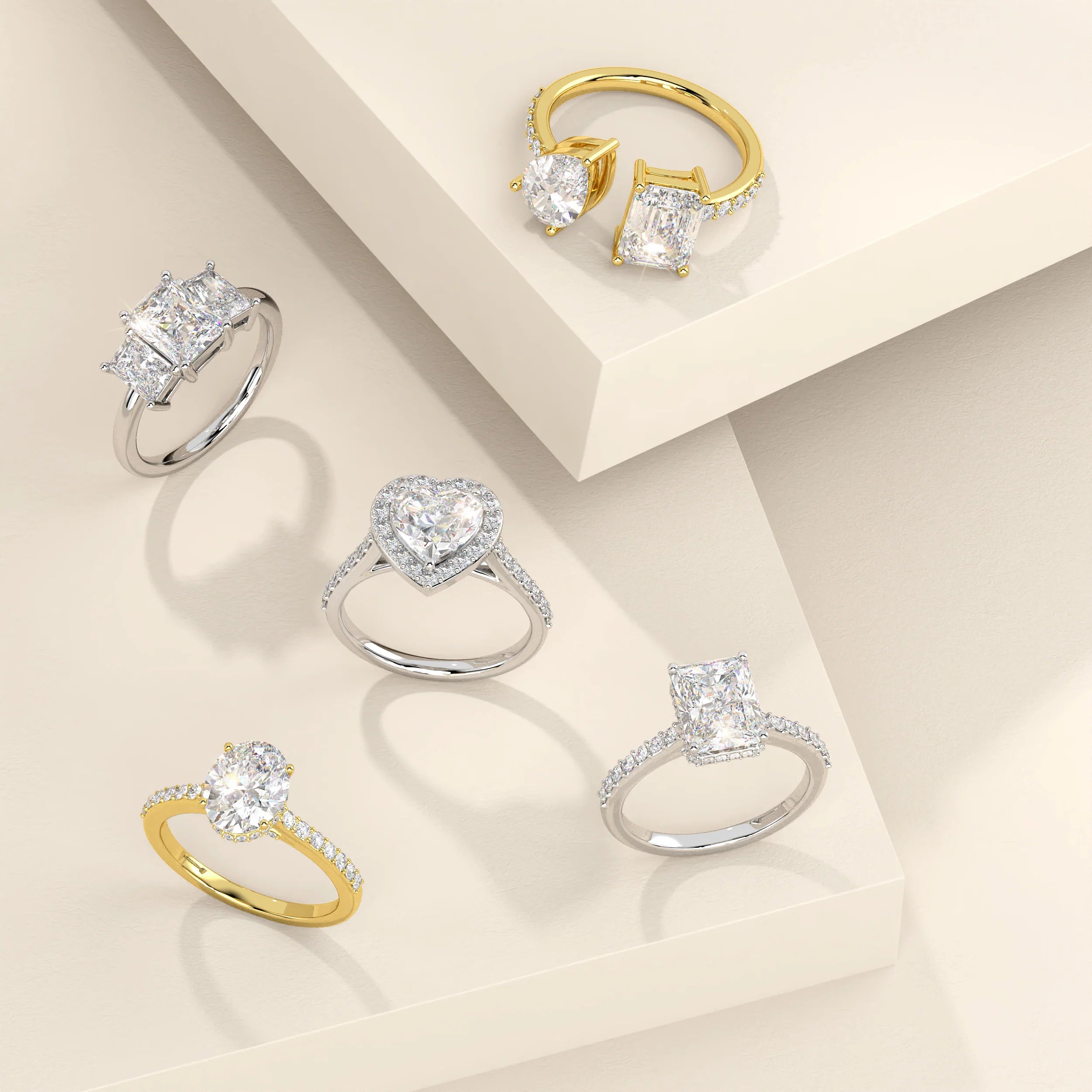
Buying a ring online is exciting, but one number stands between you and the perfect fit: your ring size. The good news is that you don't need a jeweler's mandrel or a trip to a store to figure it out. With a strip of paper, a bit of string, or a ring you already own, you can get a reliable measurement from your kitchen table in about five minutes.
This guide walks through every practical way to measure ring size at home, gives you a full US, UK, EU and India ring size chart for converting your result, and explains the details — like ring width, knuckle size, and the finger you're measuring — that most quick guides skip over.
Quick Answer: How Can I Measure My Ring Size at Home?
The fastest reliable method is to wrap a non-stretch strip of paper or string snugly around the base of your finger, mark where it overlaps, measure that length in millimeters, and compare it to a ring size chart. If you already own a ring that fits the same finger well, you can skip the wrapping step entirely and simply measure its inside diameter instead. Both methods are covered in detail below, along with how to double-check your result before you order.
Ring Size Chart
Ring sizing isn't measured the same way everywhere. The United States and Canada use a numerical scale, the United Kingdom and Australia use a letter scale, most of the European Union uses circumference in millimeters, and India uses its own numerical scale. The table below lines them all up against the actual inside diameter and circumference of the ring, which is the most reliable way to compare across systems.
A note on accuracy
There is no single universal formula that converts ring sizes perfectly between countries — different retailers round slightly differently. If you want the most dependable result, measure the millimeter diameter or circumference of a ring that already fits, and use that figure as your primary reference rather than relying on a size label alone.
US Ring Size Chart
| US Size | UK Size | EU Size | India Size | Inside Diameter (mm) | Inside Circumference (mm) |
|---|---|---|---|---|---|
| 3 | F | 44 | 4 | 14.1 | 44.2 |
| 3.5 | G | 45 | 5 | 14.5 | 45.5 |
| 4 | H | 46.5 | 6 | 14.9 | 46.8 |
| 4.5 | I | 47.5 | 7 | 15.3 | 48.0 |
| 5 | J½ | 49 | 8 | 15.7 | 49.3 |
| 5.5 | K½ | 50 | 9 | 16.1 | 50.6 |
| 6 | L½ | 51.5 | 10 | 16.5 | 51.9 |
| 6.5 | M½ | 52.5 | 11 | 16.9 | 53.1 |
| 7 | N½ | 54 | 13 | 17.3 | 54.4 |
| 7.5 | O½ | 55 | 14 | 17.7 | 55.7 |
| 8 | P½ | 56.5 | 16 | 18.1 | 57.0 |
| 8.5 | Q½ | 58 | 17 | 18.5 | 58.3 |
| 9 | R½ | 59 | 19 | 18.9 | 59.5 |
| 9.5 | S½ | 60.5 | 20 | 19.4 | 60.8 |
| 10 | T½ | 62 | 22 | 19.8 | 62.1 |
UK Ring Size Chart
UK ring sizes run alphabetically from A (smallest) to Z and beyond, with half sizes marked with a "½." A UK size N½ corresponds to a US size 7, as shown in the table above. If you're shopping from the UK or Australia (which uses the same letter system), match your millimeter measurement to the diameter column first, then read across to the UK column.
EU Ring Size Chart
Most of continental Europe — including France, Germany, Italy, Spain and the Netherlands — sizes rings directly by inside circumference in millimeters, so a EU 54 ring has an inner circumference of roughly 54mm. This is actually the most literal sizing system on the chart, since the number is close to the physical measurement itself.
India Ring Size Chart
India uses its own numerical scale that does not match the US numbers. A US size 7 corresponds to an India size 13 in the chart above. Always convert using the diameter or circumference column rather than assuming the US and India numbers line up.
How to Measure Ring Size With String or Paper

- Cut a thin strip of paper (about 1cm wide) or use a piece of non-stretch string or dental floss.
- Wrap it around the base of the finger you're measuring, where the ring will actually sit.
- Pull it snug enough that it stays in place, but not so tight that it presses into your skin.
- Mark the exact point where the material overlaps with a pen.
- Lay the strip flat and measure the length from the start to the mark using a ruler, in millimeters.
- Compare that circumference to the "Inside Circumference" column in the ring size chart above.
Avoid stretchy materials like yarn, elastic, or ribbon — they give under tension and will read smaller than your true size. A strip of printer paper or a length of dental floss holds its shape much better and gives a more consistent number if you measure two or three times.
How to Measure Ring Size Using a Ring You Already Own

If you have a ring that already fits the intended finger comfortably, this is usually the most accurate method, since it removes any guesswork about how tightly to wrap a string.
- Lay the ring flat on a ruler or ask a jeweler to measure it, and read the inside diameter — the open circle, not the outer edge of the band.
- Measure in millimeters, not inches, for the most precise reading.
- Compare the number to the "Inside Diameter (mm)" column in the chart above.
- If the ring has a wide or heavily domed band, note that width slightly affects fit — see the section on ring width below.
Make sure the ring you're using was originally sized for the same finger you're buying for; a ring that fits the right ring finger won't necessarily fit the left.
How to Measure Ring Size Without a Ring
If you don't have string, paper, or an existing ring on hand, a flexible measuring tape (the kind used for sewing) works the same way as the string method — wrap it around the base of the finger and read the circumference directly in millimeters. In a pinch, a strip cut from a sticky note or an envelope also works, as long as it doesn't stretch. What matters most is measuring the correct finger, at a normal temperature, and checking your result more than once.
How to Measure Your Finger Correctly
- Measure the exact finger the ring is intended for — sizes can vary noticeably from one finger to the next, and even between your left and right hand.
- Wrap at the base of the finger, just below the knuckle, where the ring will sit day to day.
- Keep it snug, not tight — the material should slide off with gentle resistance, not squeeze the skin.
- Measure two or three times and use the most consistent result rather than a single reading.
- Note your dominant hand — fingers on your dominant hand are often very slightly larger.

Best Time of Day to Measure Ring Size
Fingers naturally change size by small amounts throughout the day and in response to temperature. For the most reliable reading, measure in the evening, when fingers tend to be at their fullest, and avoid measuring right after exercise, a hot shower, cold weather, or a very salty meal, since heat and swelling can temporarily inflate the reading and cold can shrink it. Room temperature, mid-to-late in the day, gives the most representative average.
How Ring Width Affects Ring Size

A wider band takes up more surface area on the finger, which makes it feel tighter than a thin band in the exact same size. As a general guide, if you're ordering a band wider than about 6mm, many people find it comfortable to go up half a size from their measured result. This is worth keeping in mind when choosing between a slim solitaire ring and a wider wedding band, since the same numerical size can feel different depending on the band's width.
How Knuckle Size Affects Ring Fit
For many people, the knuckle is larger than the base of the finger, which means a ring sized perfectly to the base can be difficult to get over the knuckle, while a ring sized to the knuckle can spin loosely once it's past it. If your knuckle is noticeably larger than the base of your finger, measure both points and consider sizing closer to the average of the two, or ask about a comfort-fit inner band, which can make a ring easier to put on without changing the outer size.

What to Do If You Are Between Ring Sizes
If your measurement lands between two sizes on the chart, a few factors can help you decide:
- For a narrow band, sizing down slightly is usually more comfortable.
- For a wide band, sizing up is usually the better call.
- If your knuckle is significantly larger than the base of your finger, lean toward the larger size and consider a comfort-fit band.
- When in doubt, many jewelers — including STAR JEWELRY — offer resizing support, so a half-size adjustment after the fact is usually manageable.
Ring Size for Engagement Rings

Engagement rings are almost always measured for the left ring finger (in most Western countries), but this varies by culture, so it's worth confirming which hand you're sizing for. If you're planning a surprise proposal, measuring discreetly with a ring the person already wears on that finger — even briefly borrowed while they sleep or shower — is usually more reliable than guessing, since finger size can vary more than people expect. Many engagement ring styles, including halo and pavé settings, also tend to look and feel slightly different in fit compared to a plain band, so it's worth double-checking sizing notes on the specific style you're considering.
Ring Size for Wedding Bands and Stacking Rings
If you plan to wear a wedding band alongside an engagement ring, or stack multiple thin rings together, measure your finger while wearing the ring(s) you'll be stacking with, since the combined width changes how snug the finger feels. A band meant to sit flush against an existing ring may need to be a fraction larger than a band worn alone. Browse wedding bands and designer rings with this in mind if you're building a stacked look.
International Ring Size Conversion
If you're shopping from the USA, UK, Australia, the EU, or India and comparing ring sizes across borders, remember that letter and number scales are not interchangeable between systems — a "size 7" only means something within the US numerical system, while a UK, EU or India size 7 refers to a completely different physical measurement. Always cross-check using millimeters, and when ordering from an international retailer, look for a millimeter chart like the one on this page rather than assuming your home-country size will translate directly.

Common Ring-Sizing Mistakes
- Using stretchy string, yarn, or elastic, which distorts the measurement.
- Measuring only once instead of averaging two or three readings.
- Measuring right after a hot shower, exercise, or in cold weather.
- Measuring the wrong finger or the wrong hand.
- Assuming US and India numerical sizes are the same scale.
- Ignoring band width when choosing between a thin ring and a wide band.
- Pulling the measuring material too tight, which produces a size that runs small.
Shop STAR JEWELRY Rings
Once you know your size, here are a few popular styles to explore:

Toi Et Moi Pear Cut and Emerald Cut Lab Grown Diamond Gold Ring
From $1,955.00
A two-stone design pairing a pear and emerald cut diamond, available in multiple gold tones and standard ring sizes.
View Ring
5.00 Ct IGI Certified Radiant Cut Lab Grown Diamond Engagement Ring
From $3,735.00
A statement radiant cut solitaire, IGI certified, offered in 10K and 14K gold options.
View Ring
2.00 Ct Marquise Cut IGI Certified Lab Grown Diamond Engagement Ring
From $3,450.00
An elongated marquise cut center stone set in a classic solitaire band.
View Ring
Oval Cut and Emerald Cut Toi Et Moi Lab Grown Diamond Ring
From $2,030.00
An oval and emerald cut duo in a toi et moi setting, well suited to layering with a wedding band.
View RingRing Size FAQ
How can I measure my ring size at home?
Wrap a non-stretch strip of paper or string around the base of your finger, mark where it overlaps, measure the length in millimeters, and match it to the circumference column on a ring size chart.
Can I measure my ring size with string?
Yes, as long as the string doesn't stretch. Cotton string, dental floss, or a fabric measuring tape all work well; elastic or yarn tends to give an inaccurate, undersized reading.
How do I measure ring size without a ring?
Use the paper or string method described above. It doesn't require an existing ring — just something thin, non-stretch, and a ruler to measure the result in millimeters.
What is a US size 7 in UK sizing?
A US size 7 is approximately a UK size N½, based on an inside diameter of about 17.3mm.
What is a US size 7 in EU sizing?
A US size 7 is approximately a EU size 54, since EU sizing is based directly on inside circumference in millimeters.
What is a US size 7 in Indian sizing?
A US size 7 is approximately an India size 13, not India size 7 — the two numerical scales are different and shouldn't be assumed to match.
Does ring width affect ring size?
Yes. Wider bands feel tighter than thin bands at the same size, so many people size up half a size for bands wider than about 6mm.
What should I do if I am between ring sizes?
Size down slightly for narrow bands and up slightly for wide bands, or lean toward the larger size if your knuckle is noticeably bigger than the base of your finger.
Is it better to measure ring size in the morning or evening?
Evening is generally more reliable, since fingers tend to be at their fullest later in the day. Avoid measuring right after exercise, hot showers, or cold exposure.
Can I use an existing ring to find my ring size?
Yes — if the ring already fits the same finger comfortably, measure its inside diameter in millimeters and match it to the chart. This is often more accurate than wrapping string.
Find Your Perfect Ring Fit
Once you've measured and converted your size using the chart above, you're ready to explore STAR JEWELRY's rings with confidence — from solitaire engagement rings to everyday bands.
Shop RingsKeep Reading